
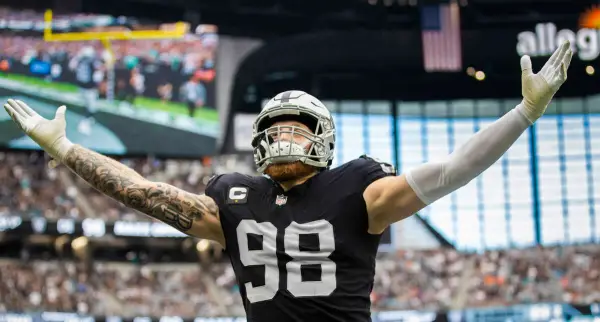
Maxx Crosby’s refusal to “take one for the team” has ignited new questions inside a spiraling Las Vegas Raiders season.
Crosby’s frustration is easy to understand. The Raiders’ star edge rusher has spent weeks dragging a battered knee through games that were often lost before halftime. Pete Carroll framed their conversation as a mutual acknowledgment of reality, but the truth is more pointed. The team needed to shut him down. Crosby wanted to keep playing. And deep down, everyone knew this moment was coming.
The organization shut Crosby down to protect their future—people forget that the NFL is a business and it just wouldn’t have been smart of them to allow Crosby to play. Still, Crosby wanted to play because the present still matters to him. Those priorities were never going to align cleanly. It’s quite obvious that the disconnect between what the coaching staff wants versus what the front office is planning no longer aligns, if it ever did.
How did Maxx Crosby react to the Raiders benching him?
What followed—Crosby leaving the facility after being informed he was done for the season—was predictable. Carroll even admitted he anticipated the reaction. When a player defined by relentlessness is told to stop, the response is rarely rational. It is emotional and it is human—and Crosby has earned the right to feel that way. No one will argue that.
The fan debate captures the divide. Some want Crosby to “take one for the team” and safeguard their draft position; others argue the franchise owes him protection after all he has given it. Both sides have a point. Crosby’s instinct is to play. The Raiders’ obligation is to protect their most valuable asset. Those truths can coexist, even if they cannot coexist on Sundays.
The tension is less about Crosby individually and more about what his situation represents. A struggling team eyeing the No. 1 pick stands on one sideline; a franchise cornerstone refusing to accept organizational surrender stands on the other. Crosby’s anger stems from competitive pride. The Raiders’ decision is rooted in long-term stability.
There is no villain here—only a franchise and its franchise player operating on different timelines. Crosby wants to win now. The Raiders need him healthy enough to help them win later. Both are right, but neither is satisfied.
And that is why this moment resonates so sharply in Las Vegas.
*Top Photo: Benjamin Hegar/Las Vegas Review-Journal