
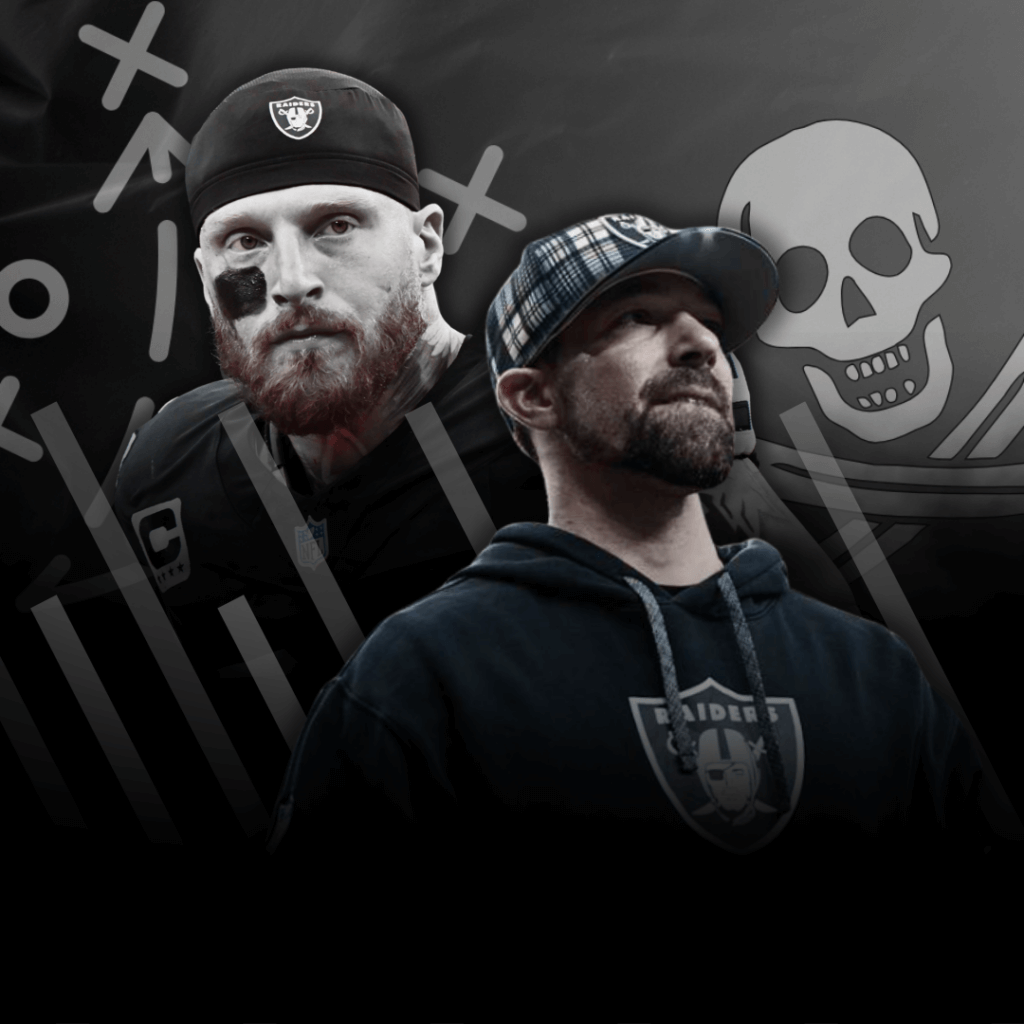
The Las Vegas Raiders have promoted defensive line coach Rob Leonard to the position of defensive coordinator. This decision has been met with praise, but it is also viewed as a concession.
Following Klint Kubiak’s arrival as head coach, the Raiders then moved to promote Leonard. It’s been a move praised as smart continuity but criticized by some. Did they do it to placate star pass rusher Maxx Crosby amid a tumultuous offseason? Now the real question is simple: did Las Vegas just find its defensive answer—or settle for the safer choice?
First of all…
Leonard is not a patsy.
Much of the outside noise centers on Maxx Crosby’s reported frustration, with some commentators suggesting the Raiders elevated Crosby’s position coach—arguably the staffer closest to him—to keep him happy. The parallel is easy to draw, but it is also the laziest conclusion. Leonard is not hanging around because the face of the franchise likes him.
Leonard’s background and lineage are impressive…
Leonard has worked for Tom Coughlin, Brian Flores and John Harbaugh. He has coached under defensive coordinators such as Steve Spagnuolo, Mike Macdonald and Patrick Graham. Reducing his promotion to a move designed to prevent a Crosby trade ignores the breadth of his résumé.
If Leonard’s history is any indication, an aggressive 3-4 structure could be coming to Las Vegas. Raiders fans have watched a defense struggle to generate pressure and too often concede easy cushions on the perimeter. Leonard’s background leans toward fronts and pressure packages that use simulated pressures and blitz looks to stress protections.
Projecting exactly what a Leonard-led defense will look like is difficult before free agency and the draft. The current roster is thin on the kind of linebackers and defensive linemen typically required to execute a true 3-4 at a high level, and the cornerback room remains a question. The preferred coverage mix—and the types of boundary corners it demands—can change quickly depending on the front and pressure plan.
The Raiders prioritized internal development…
One reason the promotion has been well-received is Leonard’s track record for development. In Las Vegas, he has helped maximize the talent he has had, including K’Lavon Chaisson, Adam Butler, Malcolm Koonce, Jonah Laulu and Tonka Hemingway. The next few months will reveal how Leonard evaluates the group he is inheriting as a coordinator and which traits he prioritizes in roster upgrades.
Tyree Wilson is a central subplot. By 2026, his draft status will be hard to debate one way or the other. Under Leonard, Wilson should be placed in a role that finally matches his skill set—whether as a 5-technique or 7-technique in a 3-4, or as a wide-9 end in sub packages. If he still does not produce, the “bust” label will stick, and his future with the team will be in question.
The added upside of Leonard, though, may extend beyond the scheme or even immediate results. Coordinators with credibility and relationships often help with retention and recruiting—especially with players who have worked with them before and want to do it again.
*Top Photo: Ramble Illustration/Getty Images