
The Las Vegas Raiders left the NFL scouting combine with another major draft checkpoint behind them. With medical evaluations and athletic testing complete, teams now have fresh data to refine grades and adjust their boards.
At the top, little changed for Las Vegas. Indiana quarterback Fernando Mendoza did not take part in testing or on-field workouts, and his status as the likely No. 1 overall pick remains intact.
Still, the draft is bigger than one selection. Several prospects the Raiders could target later in the process boosted their stock in Indianapolis, reshaping the board and creating new options down the line.
Round 1, Pick 1: Fernando Mendoza, QB, Indiana
For Raiders fans, mock draft season has become unusually predictable. Indiana quarterback Mendoza is widely viewed as the draft’s lone true lock, and the expectation is that Las Vegas will make him the No. 1 overall pick.
That kind of certainty is also a luxury. When a franchise quarterback is available and the fit is this clean, the debate narrows quickly. Mendoza’s accuracy and leadership make him an easy choice at the top of the board.
He also lands in an environment built to accelerate his transition. Under new head coach Klint Kubiak, one of the league’s most respected offensive architects, Mendoza should be put in a position to succeed sooner rather than later. Kubiak’s recent work maximizing quarterback play offers a clear blueprint for how the Raiders can streamline Mendoza’s learning curve.
The supporting cast is a significant factor as well. With emerging key players like tight end Brock Bowers and running back Ashton Jeanty, the Silver and Black are starting to establish a distinct offensive identity—fast, versatile, and designed to evolve alongside their quarterback.
Round 1, Pick 12: Keldric Faulk, EDGE, Auburn
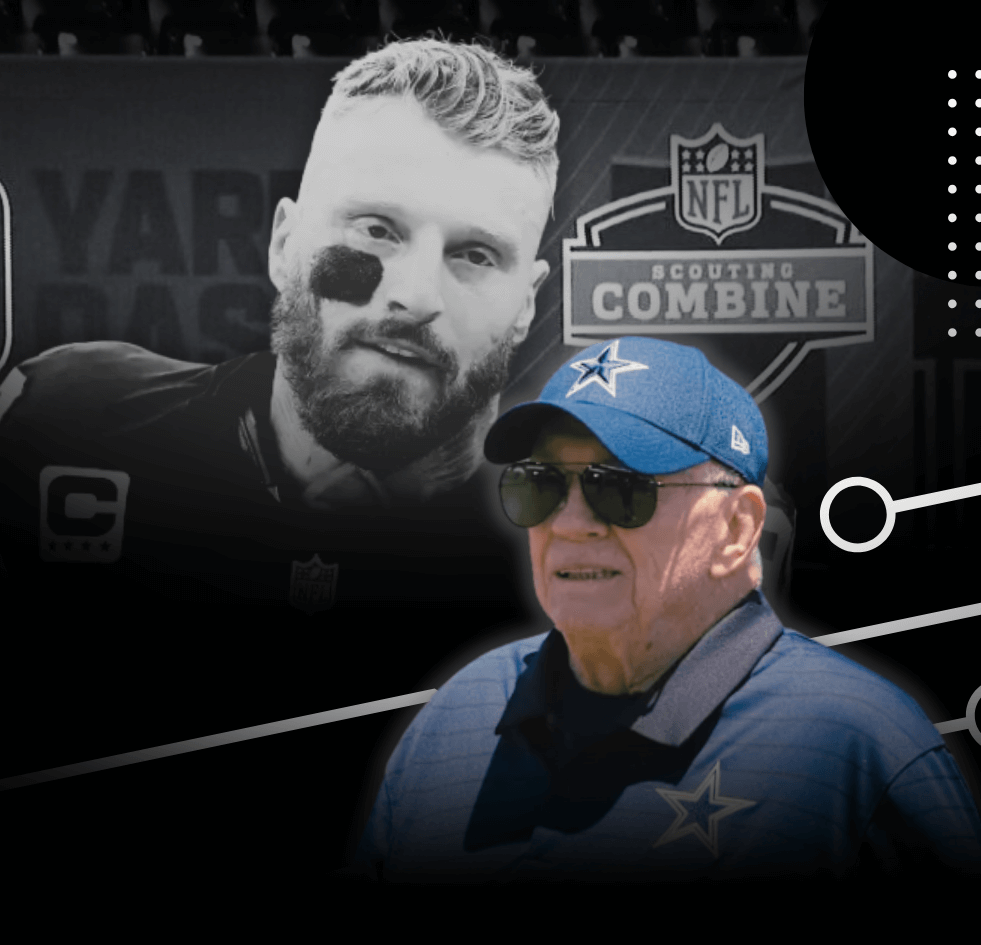
Always looking to make a splash, the Dallas Cowboys land one of the NFL’s premier pass rushers in Maxx Crosby, surrendering a first-round pick this year and another first-rounder next year.
For the Raiders, the cost goes beyond draft capital. Moving Crosby would mean losing the heartbeat of the roster and committing to a full reset of the team’s identity. He has been the face of the franchise for years and, at times, the only consistent difference-maker on the defense.
Replacing that impact is close to impossible. Still, Auburn’s Keldric Faulk would represent the type of upside swing teams make when they are forced into a new timeline. A massive, heavy-handed defensive lineman, Faulk will not draw comparisons to Crosby’s quickness. His game is built on power and a strong ability to set the edge and stop the run.
First-round edge defenders, however, are judged by quarterback disruption. Faulk can generate pressure, even if his pass-rush plan is still developing. The traits are there, and his power gives him a path to becoming a factor against the pass with refinement.
The most intriguing part is his age. Faulk is only 20, making him a legitimate long-term building block for the next era of Raiders football.
Round 2, Pick 36: Colton Hood, CB, Tennessee
One of the weakest areas on the Raiders’ defense is cornerback. Second-year pro Darien Porter returns after gaining much-needed experience as a rookie, but Eric Stokes, the starter opposite him for much of the season, is a free agent.
At 6-foot, 193 pounds, Tennessee’s Colton Hood would bring another dose of size and athleticism to the secondary. His length and comfort in press-man coverage would also help Las Vegas build a clearer defensive identity on the perimeter.
Hood is not a finished product. He can get grabby at the top of routes, and he needs to be quicker with his eyes and reactions in zone. Still, his physicality, length and competitiveness give him a chance to come off the board in the first round, which would make him a strong value pick for the Raiders.
Round 3, Pick 67: Zachariah Branch, WR, Georgia
How about a legacy pick that also fills a need? Zachariah Branch, the nephew of Raiders legend and Hall of Famer Cliff Branch, offers a similar brand of game-breaking ability at receiver.
Branch clocked a 4.35-second 40-yard dash at the NFL combine, showcasing his calling card: explosiveness. He was often used behind the line of scrimmage on screens and quick-hitters, a skill set that could pair well with Fernando Mendoza, who ran plenty of RPO concepts at Indiana.
Branch projects more as a manufactured-touch weapon than a traditional, full-route-tree wide receiver. Still, it is not hard to see how Klint Kubiak could feature a player like Branch in his offense. Think of the ways Kubiak used speed threats to stress defenses horizontally and create space for the rest of the unit.
Branch also brings high-end return ability, an area the Raiders have lacked for years. With the league’s updated kickoff format placing a renewed premium on field position and open-field instincts, his special teams value could be a clean way to justify the pick even if his receiving role takes time to grow.
And if Branch, a Las Vegas native, ends up with his uncle’s old team, there is only one request: Make sure he gets to wear No. 21.
*Top Photo: Ramble Illustration/Getty Images
Ain’t happening. Just because we had Branch. does not mean we are drafting another Branch. Crosby is not going anywhere