
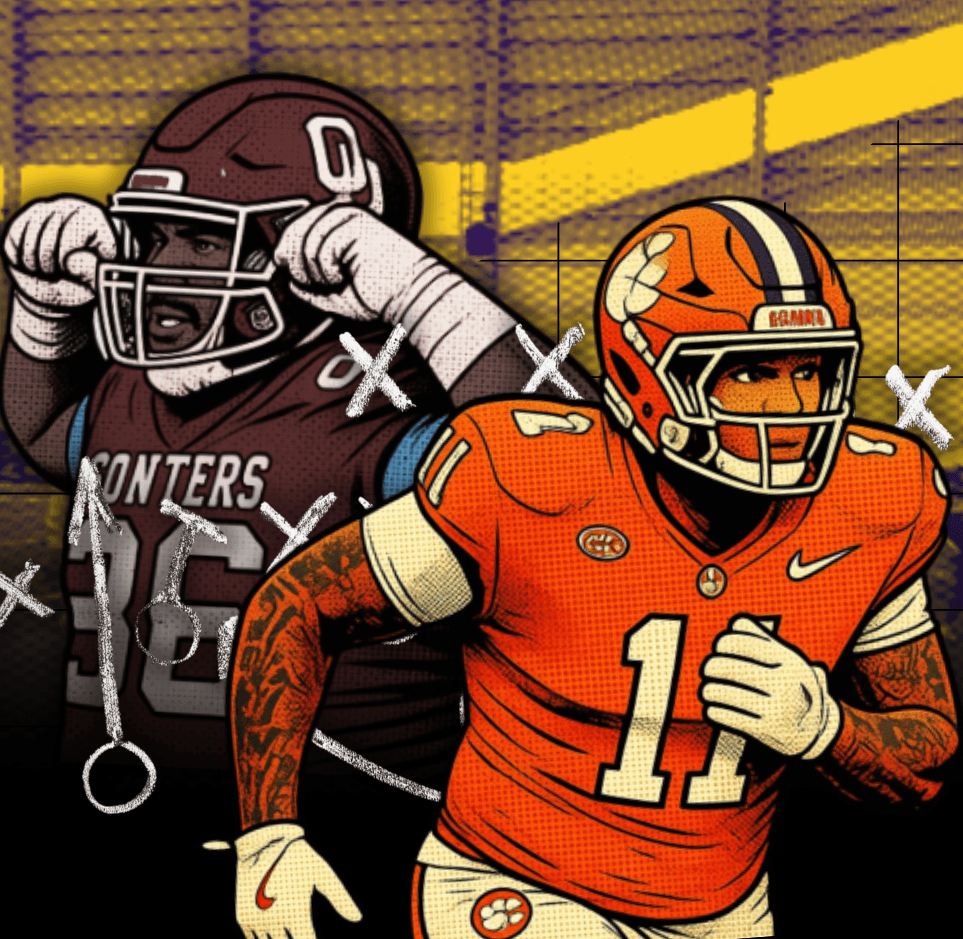
The Las Vegas Raiders have had enough of getting pushed around. Second-year general manager John Spytek and new head coach Klint Kubiak aren’t waiting around to make their mark; they’re targeting the trenches early and often in this draft. If the Raiders want to compete in the AFC West, it starts with winning the line of scrimmage.
All of that is especially true from a defensive point of view. To attack the talented quarterbacks that roam their division, the Raiders need to build a behemoth alongside Maxx Crosby—akin to the Philadelphia Eagles or Seattle Seahawks. Those Super Bowl winners built from the inside out; the Silver and Black can follow suit. Day 2 of the NFL draft might help them get started.
Who should the Las Vegas Raiders target on Day 2?
Peter Woods, Clemson, Early 2nd Round
Woods brings legitimate tools to the table. His grip strength, pad level, and hand placement in the run game are genuine strengths, and he consistently won chest control over blockers despite his lack of length. He held up well against double teams for a player his size, and a zero-penalty career reflects a disciplined, technically sound approach.
His athleticism is average, his first step adequate, and skipping the NFL Combine was a significant red flag for a prospect with this much to prove.
The historical record on undersized defensive tackles who succeeded in the NFL tells a consistent story. Aaron Donald, Calijah Kancey, and Braden Fiske were all athletes who tested similarly. Woods might fit that profile. The tape shows effort. The math shows risk. The question will be whether new Raiders defensive coordinator Rob Leonard can work his magic with Woods.
Gracen Halton, Oklahoma, Late 2nd Round
Halton makes an offensive lineman’s life uncomfortable before the snap even happens. His first step is explosive, his low leverage makes him hard to get hands on, and his swim move looks ready for NFL interior linemen. He stays slippery between blockers, keeps his eyes in the backfield while engaged and never stops competing. Once he gets into the backfield, he closes fast. He also excels as the looper on stunts, giving a defensive coordinator real flexibility.
The athleticism is legitimate. A 36.5-inch vertical and 114-inch broad jump from a 293-pound defensive lineman are numbers that demand attention.
The limitations are familiar. His arm length of just over 31 inches and lack of elite power will prevent him from becoming a top-flight interior presence against the run. His positional versatility, however, is a genuine asset. Halton has lined up everywhere from the 2-inside to the edge and could contribute at 3-technique or strongside defensive end at the next level. The Raiders could find significant value here if the scheme fits.
Darrell Jackson Jr., Florida State, Early to Mid-3rd Round
Jackson is a nose tackle who does the unglamorous work that winning defenses require. At 6-5 and 337 pounds, he anchors against the run, stacks blockers with his long arms and finds the ball carrier before shedding. He can clog two gaps at once and slow ball carriers even while engaged. His improved tackling as a senior and ability to handle a heavy snap load reflect a player who took his development seriously.
The production tells a reasonable story. Jackson finished his career with 129 tackles, 12.0 tackles for loss and 7.5 sacks, generating 14 pressures on 522 snaps in his final season with an 81.3 run defense grade.
The limitations are predictable for his archetype. Jackson is not a pass rush weapon, and teams should not ask him to be one. His value lives entirely in controlling the point of attack, absorbing double teams and keeping linebackers clean. Nose tackles who do that consistently are harder to find than people think, and the Raiders know it. If he lands in Las Vegas, he could be exactly what this defense needs up front.
*Top Photo: Ramble Illustration/Getty Images