
When Las Vegas Raiders fans were getting their Tuesday started, Mike Tomlin was the Pittsburgh Steelers head coach. He set the standard, enforced the day-to-day habits, and gave the franchise a steady identity year after year. Now, he could be on the lookout for another job.
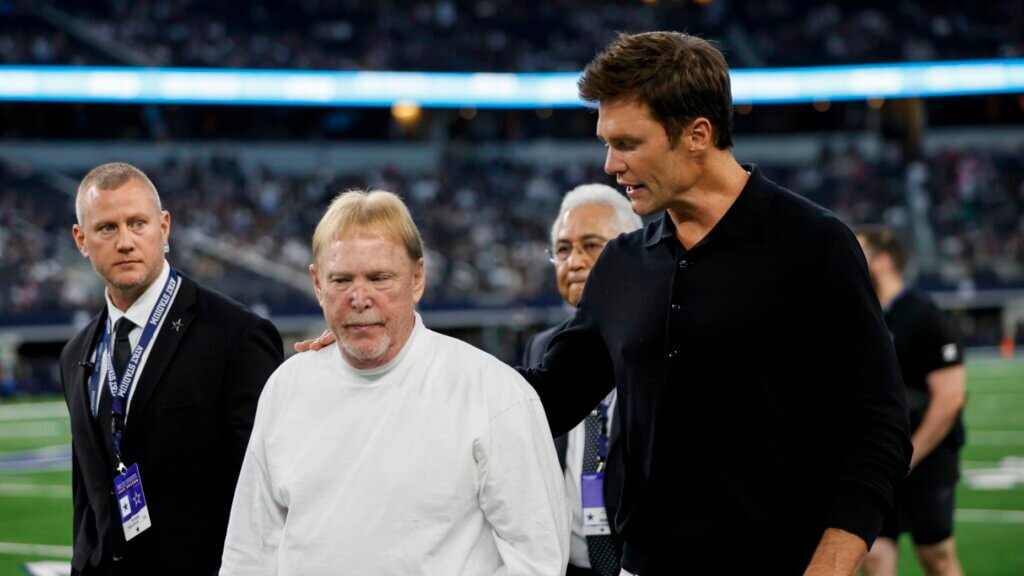
When a coach leaves any team, it creates uncertainty. When it happens in Pittsburgh—a place built on continuity—it signals a rare kind of reset. With Tomlin out, it’s now sent shockwaves through the NFL world. Funny enough, the Tom Brady-led Raiders are in the midst of their own reset. Unlike Pittsburgh, which has only needed the services of two coaches since the 1980s, Sin City is looking for exactly that: stability.
In Las Vegas, that news will immediately feed a familiar hope: that the right head coach can erase a losing culture. Tomlin is the name that makes that hope feel rational. His CV reads like permanence, and permanence is what the Raiders have not been able to hold on to. Raider Nation isn’t just chasing wins. They are chasing a baseline—a team that looks organized, plays with purpose, and does not unravel at the first sign of adversity.
Steelers fans complained for years about being one and done in the playoffs every year. Raiders fans, on the other hand, would’ve done anything for all those years of playoff berths.
The Mike Tomlin conversation needs to stay grounded in reality
First, Tomlin did not get fired. He stepped down, and the Steelers still have leverage because of how coaching contracts work. That matters because the Raiders’ situation is urgent. They fired Pete Carroll after one season. They need a coach now, not a year from now. If Tomlin wants time away, Las Vegas cannot build its plan around a timeline it does not control.
Second, Tomlin’s departure changes the hiring market even if he never takes another job. The Steelers are now an opening, and it is one of the league’s most attractive. It offers credibility, stability, and a recent playoff standard. That kind of vacancy will pull candidates. Conversely, it forces other organizations, including the Raiders, to increase potential offers. Let’s call a spade, a spade, are you going to choose the model of stability versus that of instability with the Raiders?
This is where the idea of Tomlin as a culture cure can get overstated. A head coach can raise expectations and tighten the operation. He can make accountability real. He can change how players work and how a locker room responds under pressure. But culture does not survive on reputation alone. It survives on alignment—ownership, front office, coaching staff, and roster-building all pulling in the same direction when things get difficult. Tomlin’s standards worked in Pittsburgh because the Steelers’ structure supported them for years.
That is the part people gloss over when they talk about “resetting” the Raiders. Even if Tomlin were available, the bigger question remains: would Las Vegas support that standard when the season turns, the noise spikes, and the temptation to pivot returns?
Tomlin’s credentials are real. The mistake is assuming credentials, by themselves, end a cycle.
*Top Photo: Getty Images