
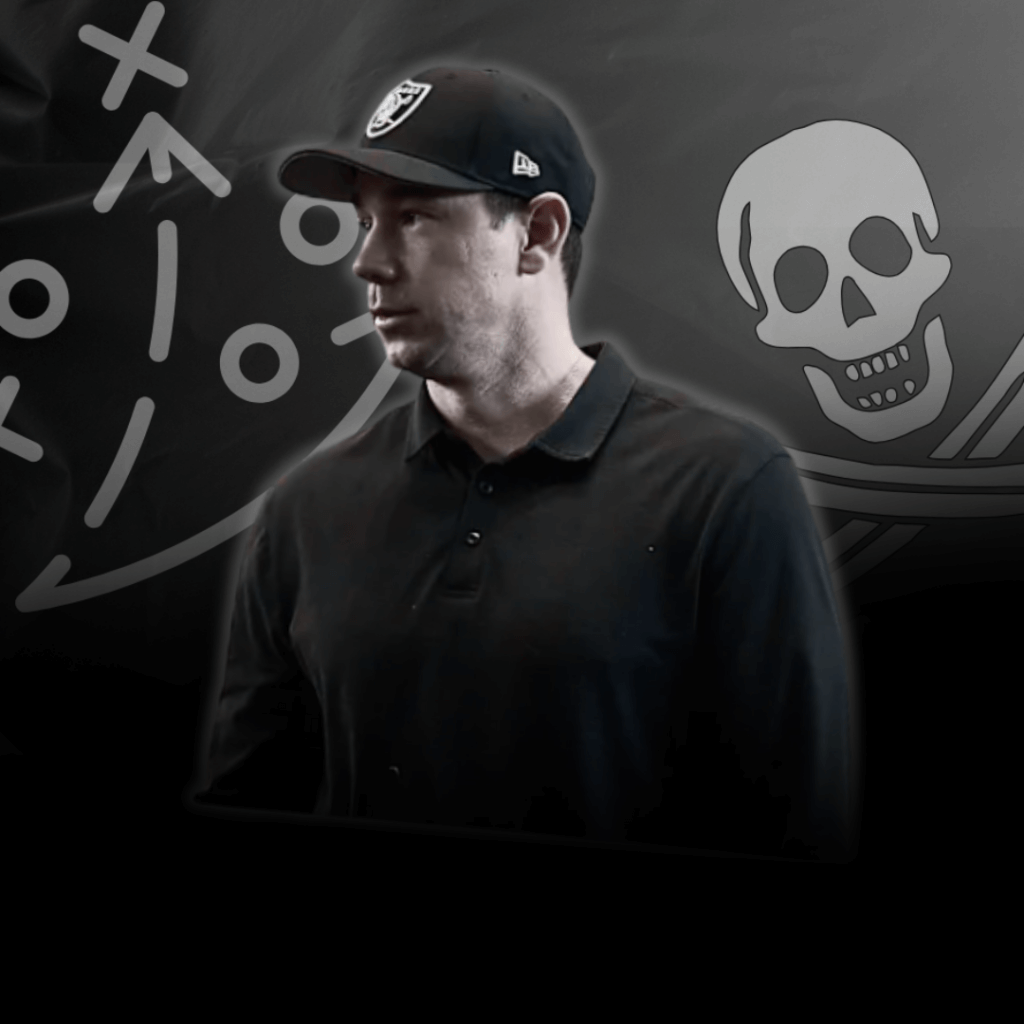
These five wide receivers, ranging from SEC playmakers to under-the-radar fits, align perfectly with Klint Kubiak’s vision for the Las Vegas Raiders.
The Raiders enter the 2026 NFL Draft with an urgent need at wide receiver. Jalen Nailor is the most reliable option currently on the roster, but his profile as a complementary piece rather than a high-volume target leaves the position without a true focal point. Dont’e Thornton Jr. complicated matters further by sliding down the depth chart as last season progressed.
That reality has driven John Spytek and the front office to cast a wide net. Las Vegas has held multiple top-30 visits with premier receiver prospects, signaling genuine urgency at the position heading into draft week.
Veteran free agents remain available as an alternative path, though several would carry significant salary cap implications. The options, whether through the draft or free agency, each come with their own tradeoffs in talent, fit and cost.
The following list evaluates each candidate on three criteria: talent, size and the capital required to acquire them.
1. Chris Brazzell II, University of Tennessee
Brazzell shares an alma mater with Dont’e Thornton, but the comparison ends there. Where Thornton is a raw speed threat still developing his craft, Brazzell arrives with a more complete route tree and a catch radius that few receivers in this class can match.
The resume supports the projection. Brazzell was a Biletnikoff Award semifinalist and earned first-team All-SEC honors, credentials that reflect consistent production against elite competition. At 6-foot-5, he gives Fernando Mendoza a legitimate jump-ball target, a dimension the Raiders offense has been visibly missing.
What makes Brazzell particularly compelling for Las Vegas is his availability. He projects as a realistic option at pick No. 36, meaning the Raiders would not need to sacrifice additional capital to land him. John Spytek could even trade down slightly from that spot and still have a credible path to selecting him, making Brazzell not only the most appealing receiver on this list but also the most attainable.
2. Zachariah Branch, University of Southern California
Zachariah Branch carries both a famous last name and the speed to back it up. The nephew of Raiders legend Cliff Branch profiles as a third-round prospect, but what he brings to Las Vegas extends beyond family history.
Branch’s explosive ability addresses a dynamic the Raiders’ offense has been missing. He demonstrated his playmaking abilities right away at the collegiate level by returning a kick for a touchdown in his first game, and he maintained that reputation during his time at USC and Georgia. Few prospects in this class can rival his straight-line speed or his instincts as a returner.
For a franchise with deep ties to the Branch name, there is a sentimental element to this conversation. More importantly, however, there is a football one. The Las Vegas native and Bishop Gorman product gives John Spytek a legitimate weapon in the return game while adding a vertical threat the Raiders can develop alongside Fernando Mendoza as the offense continues to take shape.
Branch is meant to be in the Silver and Black. By all means, having blood connected to the organization means a lot. But he also is a native to the city. If he were a couple inches taller, Branch would be on the top of this list. In other words, the Raiders already have multiple undersized wide receivers.
3. DeAndre Hopkins, Baltimore Ravens
Hopkins is no longer the dominant force he was during his prime years with the Arizona Cardinals and Houston Texans. What he represents for Las Vegas, however, is something the Raiders currently lack: a reliable underneath receiver with the veteran presence to elevate those around him.
The leadership dimension is crucial in a receiver room that lacks experience. Tre Tucker and Jalen Nailor carry the most tenure among the current group, yet neither has reached five NFL seasons. A proven veteran alongside Fernando Mendoza provides stability at a position where the Raiders cannot afford another year of uncertainty.
Hopkins also figures to come at a manageable cost. After a productive 2024 season with the Kansas City Chiefs demonstrated he still has functional value, he is unlikely to command significant salary cap space heading into 2026. For a team balancing roster construction with financial flexibility, that combination of experience and affordability makes him a sensible and low-risk addition to consider.
Related: Building a team worthy of Fernando Mendoza
4. KC Concepcion, Texas A&M University
Concepcion is one of the more intriguing prospects in a draft class that features wide receiver as one of its deepest position groups. The Charlotte, N.C., native has the athleticism and playmaking ability to justify first-round consideration, though competition from prospects such as Makai Lemon and Carnell Tate could push him toward the back end of Round 1.
That positioning creates both an opportunity and a complication for Las Vegas. Concepcion’s upside is genuine, and his fit within Klint Kubiak’s offense is difficult to ignore. However, his draft range makes him a difficult target for a Raiders team picking at No. 36 in the second round.
To land Concepcion, John Spytek would likely need to trade up into the late first round, an aggressive move that costs capital the Raiders may prefer to preserve. He is the kind of talent worth the investment, but Las Vegas will need to decide early whether the price of moving up is something they are willing to pay.
Mock Draft: Raiders land Alabama star to pair with Fernando Mendoza
5. Deebo Samuel, Washington Commanders
Rather than spending draft capital on a wide receiver early, the Raiders could address the position through free agency. Samuel brings value both as a receiver and as a contributor in the run game, two traits that fit naturally within Klint Kubiak’s offensive system.
At 30, Samuel is past his All-Pro peak, but he has not exhausted his usefulness at the professional level. His ability to produce in high-volume roles while contributing on special teams makes him a practical and versatile addition for a team still building its identity.
A reunion also carries financial logic. Samuel’s prior relationship with this coaching staff creates a realistic path to a team-friendly deal, something the Raiders would need if they pursue him after the draft.
If the draft does not deliver the receiver room upgrade Las Vegas requires, Samuel represents a credible fallback option, one who brings both production and leadership to a young and largely unproven group of pass catchers.
*Top Photo: Ramble Illustration/Getty Images